A broad space for

Therapy

Mental health, Therapy

When Clients Say “I Don’t Know” – And They Mean It

We’ve all heard it.The small shrug. The blank pause.“I don’t know.” And maybe sometimes it really is avoidance. But more often, it’s something softer — a nervous system trying to stay safe. When someone says “I don’t know,” it can mean: “I don’t know” isn’t a wall. It’s a pause....

Identity & Self-Discovery, Personal, Relationships, Therapy, Therapy Cards

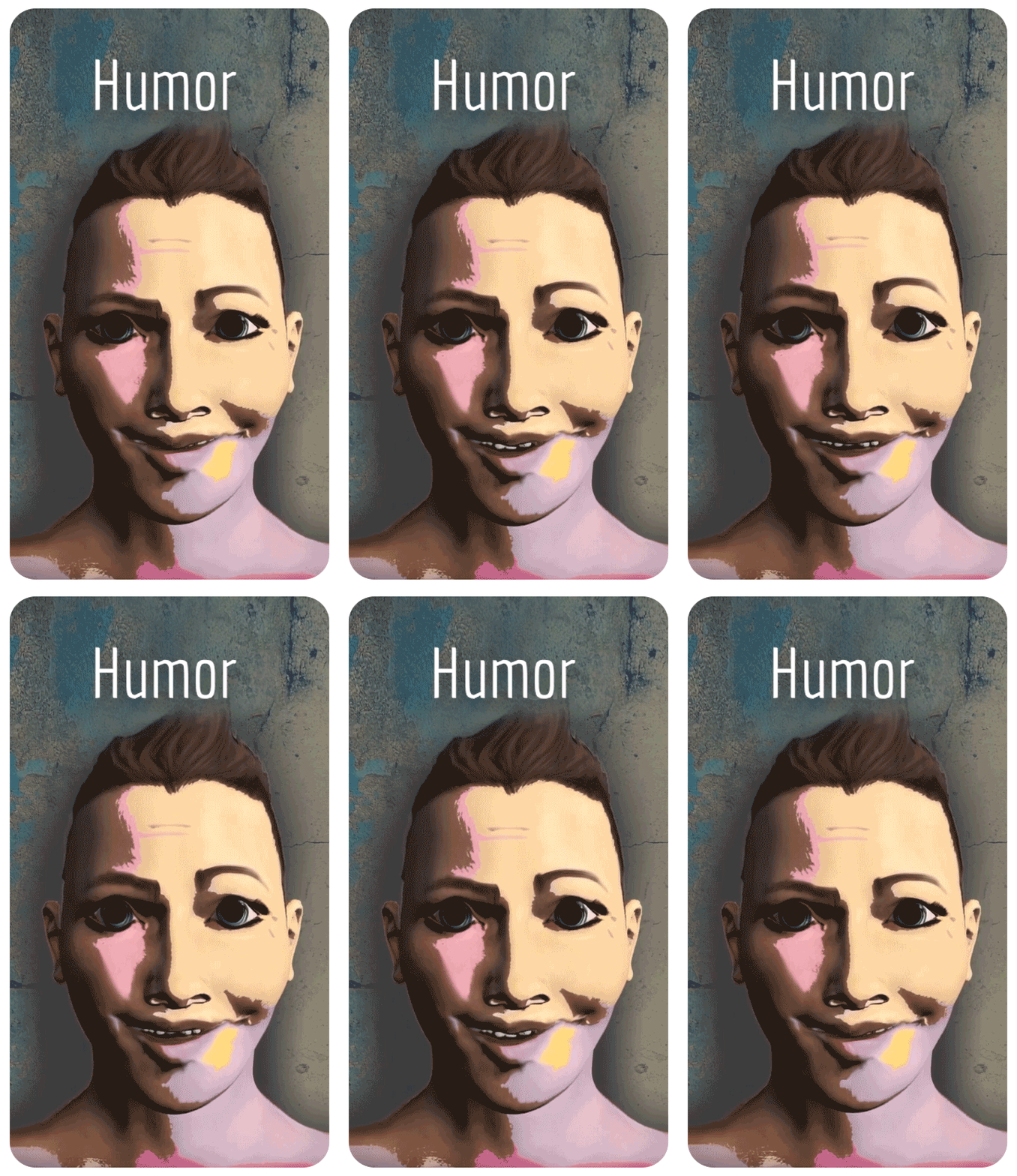
Meeting My Humor Part

What happens when I stop laughing at my pain—and start listening to the part of me that laughs? This week, I pulled the Humor card from Parts in Me and decided to ask it a few questions—just to see what it might say back. Because humor has always been here...

Emotional Regulation & Grounding, Guides & Tips, Personal, Therapy

The Role of Humor in Therapy: How to Use It Without Losing Connection

Humor has always found its way into therapy rooms. Sometimes it’s a bridge, sometimes a shield, sometimes a lifeline. The question isn’t whether humor belongs—it does. The question is how to use it in ways that deepen the work, rather than distract from it. As someone who has both sat...

Mental health, Mental Health & Society, Therapy, Therapy Cards

Healing Across Borders: The Story Behind Our Collaboration with EMDR4PEACE

At OK2Feel, everything we create grows out of lived experience, the raw, messy, beautiful work of being human. As someone who lives with anxiety, chronic pain, and disability, I know what it means to feel broken by the world and still reach toward healing. That’s why our recent collaboration with...


Guides & Tips, Therapy, Therapy Cards

The Space Between Sessions: Helping Clients Hold Emotional Threads

Some of the most meaningful parts of therapy unfold after the session ends—during the drive home, in a moment of silence three days later, or when a familiar trigger lands a little differently than before. But the space between sessions can also feel blank, disjointed, or too much to hold...

Anxiety, Guides & Tips, Therapy

What Clients Say vs. What They Mean (And What Might Help Us Ask)

Decoding emotionally ambiguous phrases and how to meet them with care and clarity....

Emotional Regulation & Grounding, Guides & Tips, Mental health, Therapy, Therapy Cards

When Clients Intellectualize Their Feelings: 10 Ways to Gently Shift Toward Emotional Processing

Some clients explain their emotions instead of feeling them—staying in their heads as a way to stay safe. While insight has its place, healing happens when emotions are experienced, not just analyzed. Here are 10 practical, in-session strategies to gently guide clients back to feeling: 1. Call Attention to the...

Guides & Tips, Therapy

How to Get Clients to Open Up: 8 Practical Strategies

One of the biggest challenges in therapy isn’t just what to say—it’s how to create a space where clients feel safe enough to share. For many, talking about emotions is unfamiliar, intimidating, or overwhelming. Whether you’re a therapist, coach, or facilitator, helping people access and express their emotions is a...

Guides & Tips, Therapy, Therapy Cards

Therapist’s Guide: Using Therapy Cards to Grow Connection

Therapy cards offer a creative and structured way to explore emotions in sessions. Whether working with couples, individuals, or groups, they can be a powerful tool to facilitate deeper emotional work. By using structured prompts and interactive elements, therapy cards help clients name, explore, and process their emotions in a...

Mental health, Personal, Therapy, Therapy Cards

The Power of Visual Prompts in Therapy: How “Parts in Me” and “Emotions in Time” Came to Life

Therapy is often viewed as a space for dialogue—a meeting of minds where healing emerges through conversation. But what happens when words don’t come easily? When emotions feel too overwhelming, abstract, or foreign to name? This was my reality as a teenager navigating mental health struggles, and it’s the reason...