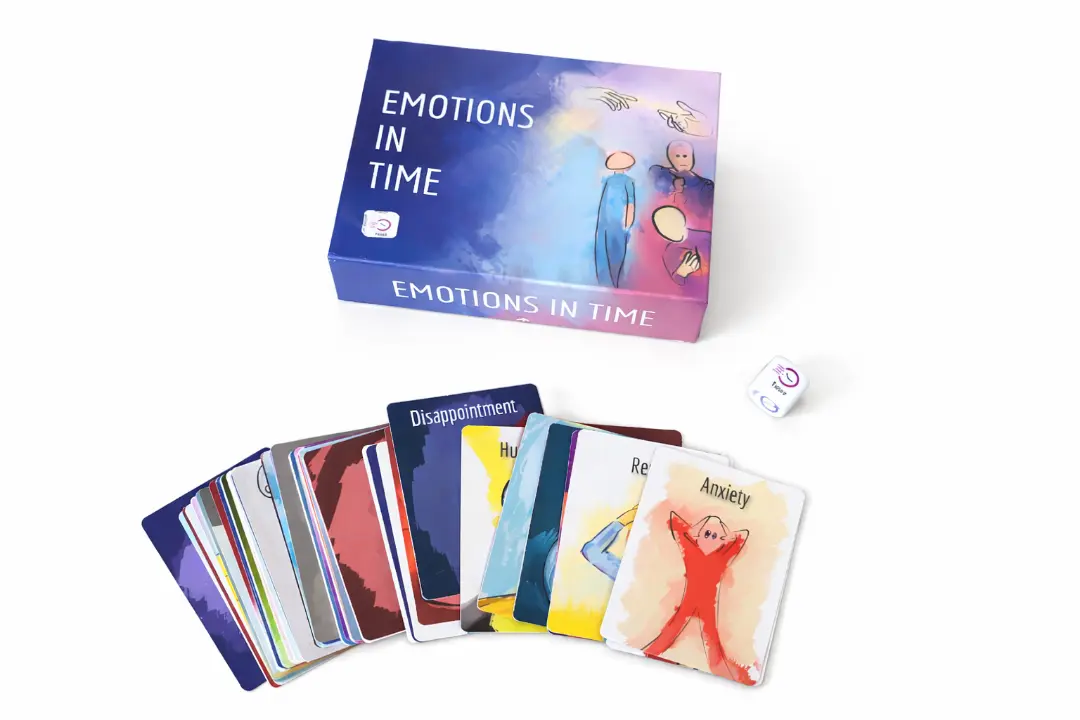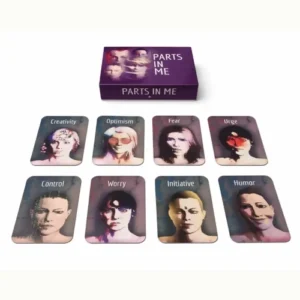
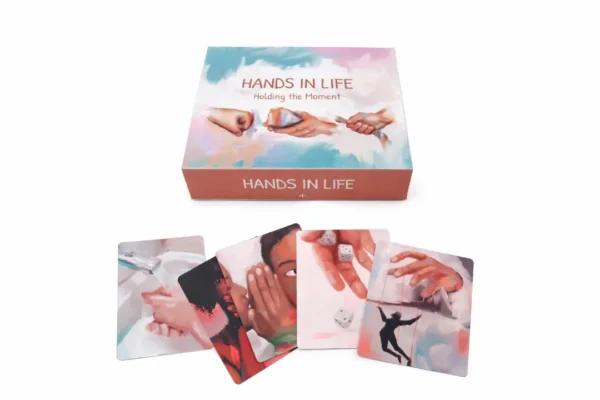
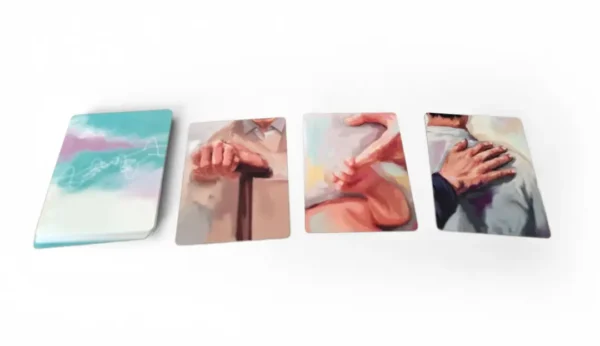
52 illustrated hand cards and a context die that help people begin from an image, a moment, and a story — before they have to explain everything in words.
Especially useful for therapists and emotional-support professionals — and gentle enough for meaningful personal reflection, family conversations, or group work.
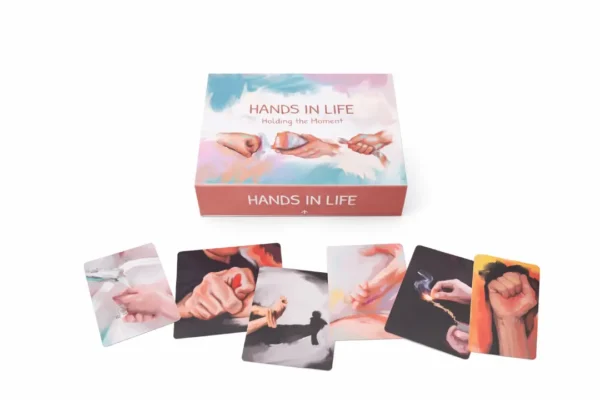
Another question can feel too big. Hands in Life offers a different starting point: an image they can notice before they have to explain themselves.
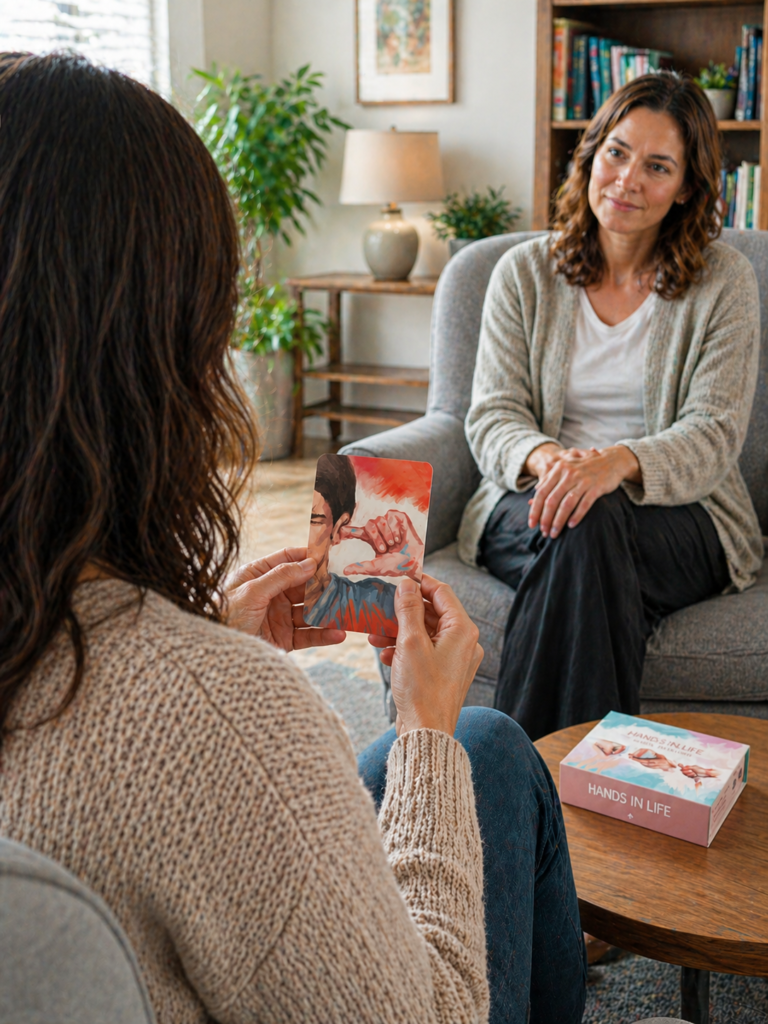
They choose a card, roll the die, and respond to what appears. A memory, relationship, feeling, or story can emerge naturally — without demanding immediate vulnerability.
Hands in Life helps shift the conversation from “tell me what you feel” to “what do you notice here?” — softer, more visual, and often more revealing.
After choosing a card, the die gives another anchor: alone, with someone, in a group, building, breaking, or holding on / letting go. It turns one image into many possible doors.
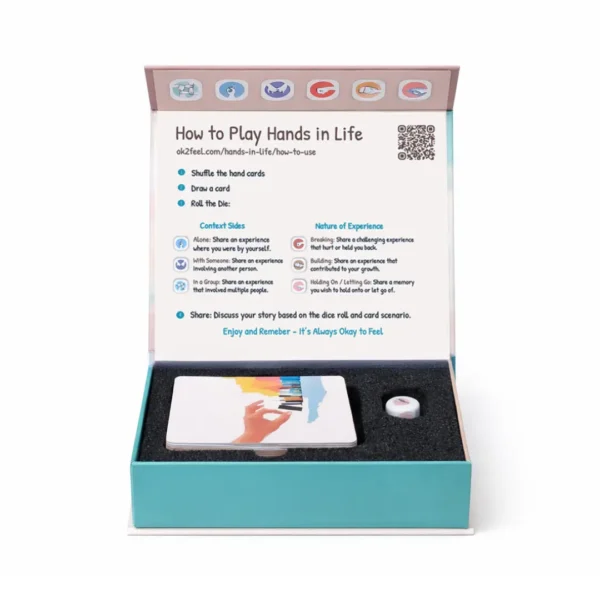
Alone, with someone, or in a group — the die invites the person to place the card inside a relational context.
Building, breaking, holding on, or letting go — the die helps name the emotional direction of the story.
The same card can lead to a memory, a relationship, a fear, a wish, or a moment of growth.
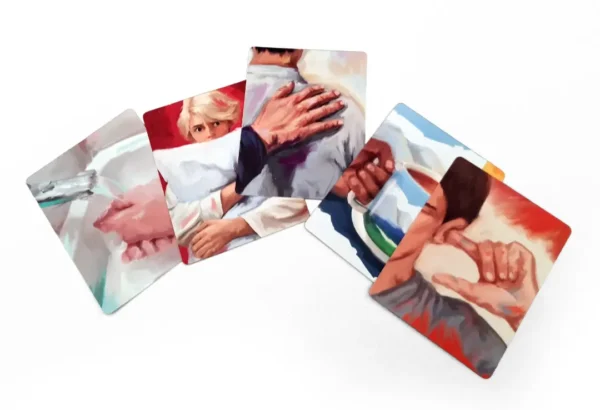
Hands in Life was created from the belief that hands often say what words can’t yet reach: holding, pushing away, building, breaking, asking, offering, protecting, letting go.
The cards aren’t prescriptions. They’re invitations — a way to make emotional conversations feel more human, less intimidating, and more real.
— Hilit, founder of OK2Feel
A card can feel less confrontational than a question. A die can make the prompt feel playful instead of clinical. Together, they create a frame that makes it easier to begin.
Use it in therapy sessions, coaching, group work, or personal reflection — anywhere a visual prompt can help open a more meaningful conversation.
The illustrations let people start by noticing what they see, before they need to explain what they feel.
The die adds relational and emotional context, helping one card become hundreds of possible prompts.
Useful when direct questions feel too much, too soon, or too abstract.
Pick a card, roll the die, and respond to what appears. The structure is simple enough to use immediately.
Especially strong for professional use, while still accessible for personal reflection and meaningful conversations.
A polished physical tool that feels at home on a shelf, on a table, or in a therapy room.
Not really. A simple invitation is enough: “Pick a card and roll the die.” The lack of heavy framing is part of what makes the deck feel approachable.
Usually, no. Picking a card and rolling a die feels more like an invitation than an assignment, which can help people engage without feeling pressured to perform insight.
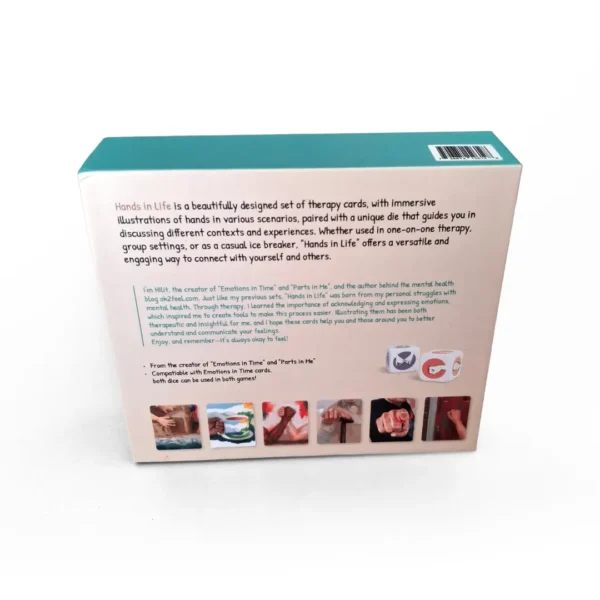
It is very useful for therapists, coaches, and emotional-support professionals, but it can also work beautifully for personal reflection, family conversations, or group workshops.
Yes. The same card and die combination can open something different depending on the person, the timing, and the context. That makes the deck easy to return to again and again.
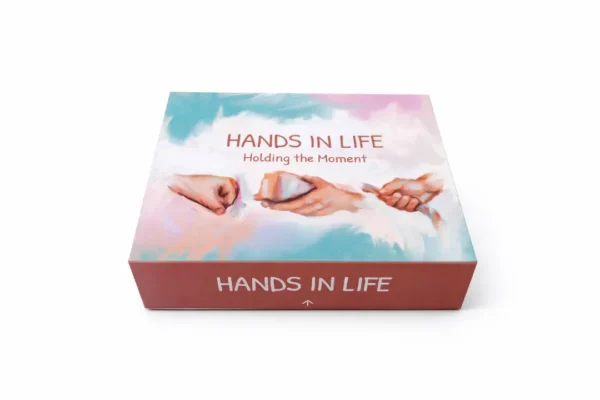
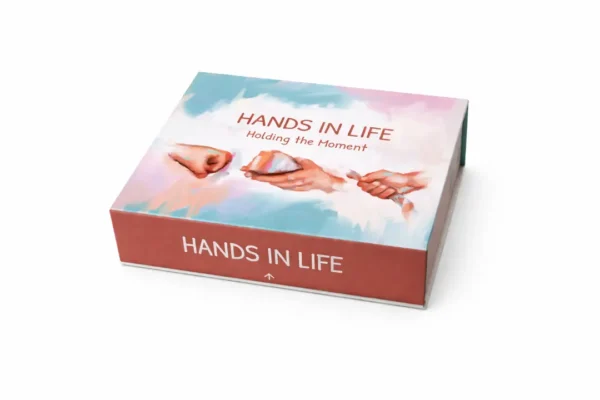
52 illustrated hand cards, a context die, a usage guide, and a high-quality magnetic box designed to feel like a thoughtful professional tool rather than a children’s game.